
To market a running event in Uganda, start with the people who already run: clubs, workplace groups, schools and friends who train together. Then point every poster, WhatsApp message and radio mention to one link where they can register and pay on the spot.
Below is a plan you can adjust to your budget. It works for a city race, a charity walk or a small community run.
Start with the running community
A recommendation from a club captain or a training partner is worth more than a boosted post. Before you spend on adverts, make a list of the groups around your route and speak to each one directly:
- Running clubs and weekend hash groups
- Gyms, fitness classes and sports shops
- Workplace wellness and staff welfare teams
- School and university sports departments
- Churches, savings groups and neighbourhood associations
- Past participants, if you have run the event before
Give each group something easy to forward: one short message, the link and a poster image. Ask whether they will share it, and whether they might come as a team. Offer a few weeks’ notice, because a group that trains together needs time to prepare.
Put the right information on every poster
Before you print, make sure you have permission for your route and date. Then include:
- The event name, exact date and start time
- The location and a clear start point
- The distances on offer and the price of each
- One link and QR code
- One contact number
- What the entry includes, such as a shirt or a medal, if it really does
If you have a cause or a sponsor, say exactly what their role is. If the run raises money, say where it goes. People will ask.
Use one link everywhere
Each Laces event has its own short link and QR code. Use them on all your material, so that nobody has to ask how to pay or which number to send money to. Runners open the link in a browser, with no app and no account, and you can send anyone unsure to the step-by-step guide.
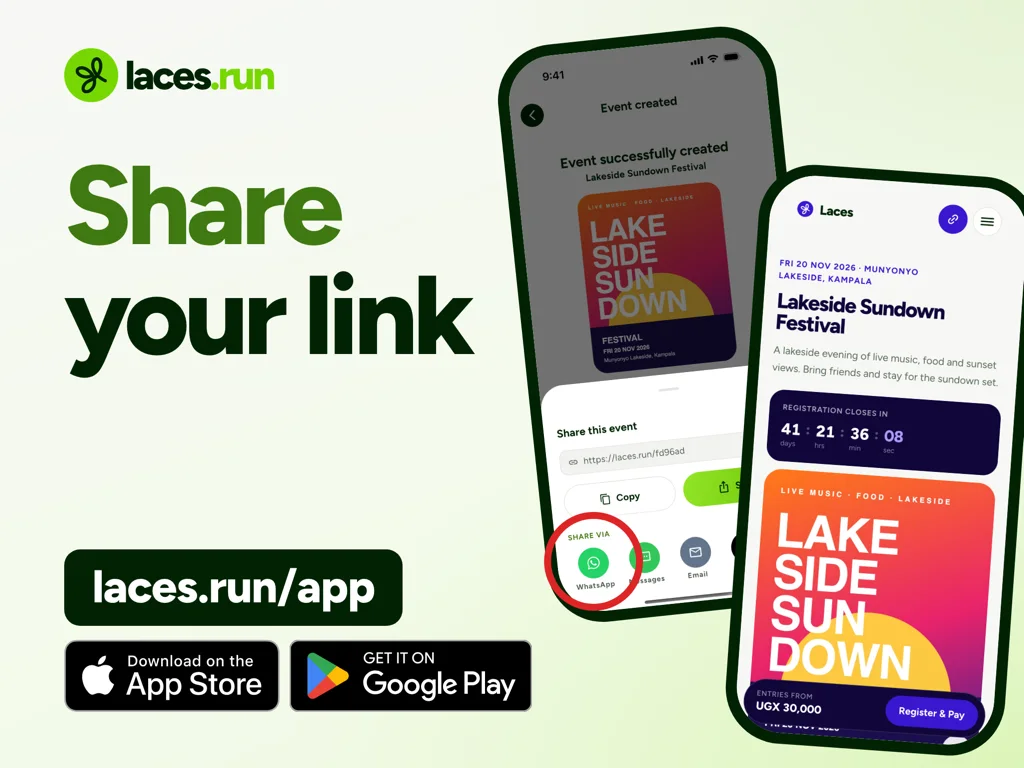
The share screen in the app sends the link straight to WhatsApp and other apps. On radio or at a gathering, remember that the short code is case-sensitive and hard to say aloud. Your organization’s own address, such as laces.run/your-name, is easier to say, and it lists your events.
Events taking entries can also appear on the Laces events page, but treat that as a bonus. Your own community will bring most of your runners.
Price honestly and use real limits
Create a ticket type for each distance, with its own price and number of places. If you cap a distance, the event page can show how many places are left, which is a real and honest reason to register now. You can also collect shirt sizes and colours at registration, so you are not counting sizes from messages the night before.
Early-bird offers only work if the deadline is real. The Laces app has no setting that changes a price on a date. If you want a lower price for early runners, one honest way is a separate ticket type, such as “First 100 entries”, capped at 100, alongside your standard price. Say what it is, and do not extend it once it has sold out.
Runners pay the Laces Service Fee on top of your entry price, and you receive the full entry price. Check the pricing page so that your poster does not surprise anyone at checkout.
Use proof you can stand behind
People want to know that the event is real and well run. Share things that are true and that you have the right to use:
- Your route map, once it is confirmed
- Photos of the actual shirt and medal
- Photos from your last edition, with permission from the photographer
- A short introduction from the organizers
- Confirmed partners, with their agreement
Never invent turnout figures or testimonials. Runners talk to each other, and one false claim can follow your event for years. On an open Laces event, the page can show how many confirmed runners are going once there are at least three, so your real numbers do some of this work for you.
Measure paid entries every week
Likes do not fill a start line. Each week, write down the paid entries for each distance and compare them to your target. The app shows registrations and sales live, so this takes a minute.
To learn which channels work, add a registration question such as “How did you hear about this race?” You read the answers in the app, on each order, and an owner or admin also gets them in the participant CSV, so you can tally them in a spreadsheet. Do more of what brings entries, and stop paying for what does not.
Check your orders as well. Some people start registering and do not finish, often because a prompt timed out or a wallet was short. The app lets you nudge those orders or send a pay link, which is often cheaper than finding a new runner.
A simple timeline
These are starting points, so adjust them to the size of your event:
- Eight to twelve weeks out: confirm your route and permissions, create the event, apply for payment approval, and speak to clubs and partners.
- Six to eight weeks out: put up posters and share with community groups. Announce partners as they confirm.
- Three to five weeks out: share training tips and route previews. Visit club sessions in person if you can.
- Two weeks out: remind everyone of any shirt or entry cut-off, and push the distances with places left.
Plan the final week
Most questions arrive now, so answer them before they are asked. Share the arrival time, parking, kit collection, what to bring and any road-safety rules. Send this through your own email or groups, because Laces has no tool for messaging runners. The orders file lists each buyer’s email and phone. Also check who is on your team to scan tickets on the day.
For more on the rest of the work, read our guide to organizing a marathon or community run and see how runs and marathons work on Laces.
After the race
Post a thank-you and a short recap within a few days, while people are still sharing photos. Thank partners and volunteers by name, with their permission. If you run the event again, cloning the event in the app carries over much of your setup, so you can start promoting the next edition sooner.
Frequently asked questions
What is the best channel to promote a run in Uganda?
It depends on your runners. Community groups and clubs usually give you the most trust for the least money, so start there, then use your registration question to see what else works.
What should a registration link show?
The event details, distances, prices and refund terms, plus a way to register and pay. On a Laces event page, put the refund terms in your description.
Should we use early-bird prices?
Only if the discount and limit are real. Use a separately capped ticket type on Laces, because the app has no scheduled price change.
Can I sell to teams from one company?
Yes. One order can carry several people, so a team can pay once. They share one QR code, and the scanner taps each name.
Put one link on every poster
Create your race, add a ticket type for each distance, and let runners register and pay from their phones.
Read next
 For organizersHow to Organize a Marathon or Community Run in 2027: A Planning ChecklistA 2027 planning checklist for a marathon or community run: route and permissions, safety, entries, runner messages, kit pickup, race-day check-in and money.5 Nov 2026 · 8 min read
 For organizersHow to Organize a Charity Run or Fundraising Walk in UgandaPlan a charity run or fundraising walk in Uganda: name the cause, set entry tiers, keep supporters safe, and report honestly on where the money went.4 Nov 2026 · 6 min read
 For organizersHow to Increase Event Registrations and Ticket SalesHow to increase event registrations: a clear offer, one link, real deadlines, partners who share, an easy phone checkout and follow-up on failed payments.5 Nov 2026 · 7 min read


