
To organize an event in Kenya, fix the county and venue first, because most of your permissions follow from them. Then find out which notices and licences apply, decide who is legally selling the tickets, open registration with M-Pesa and Airtel Money, and plan your gate. Rules differ between counties, and the event type changes the answer, so this guide tells you who to ask and what to ask them. It is not legal advice.
Start with the place, not the poster
Kenya has 47 counties, and many of the questions below are answered at county level. A venue in Kisumu and a venue in Nairobi can give you different answers on fees and licences. So choose the county and shortlist your venues before you settle anything else.
Ask each venue, and keep the answers in writing:
- How many people can it legally hold, and what time must the event end?
- What does it already hold licences for, such as music or alcohol?
- What does the hire include? Ask about power, security, toilets and cleaning.
- How strong are Safaricom and Airtel signal on site? Your ticket scanning depends on it.
Public grounds are a separate case. In Nairobi, for example, hire charges for Uhuru Park and Central Park were reported in 2023. Get a written booking from whoever owns the ground before you print a date.
Ask your local police station
Kenya’s main law here is the Public Order Act. We checked this against the revised edition of 2018, so check the current one. In that edition:
- A person planning a public meeting or public procession must notify the “regulating officer”, the officer in charge of the local police station, at least three days and at most 14 days before.
- The notice gives the organizer’s full names and physical address, the date and time, and the site or route. The time it describes must fall between 6 am and 6 pm.
- The organizer or an authorized agent must be present throughout.
- Notice goes on a prescribed form, and holding a meeting or procession without it can be an unlawful assembly, an offence carrying up to a year in prison.
The Act also defines “excluded meetings”, which include meetings held exclusively for social, cultural, charitable, educational, commercial or industrial purposes. Many ticketed events may fall there. A procession is treated separately, as anything moving “in, to or from a public place”, and that could catch a charity walk or a road event. We can’t tell you which category your event is in, so ask the station in writing and keep the reply.
Even for an excluded meeting, you can ask for police presence. The Act says that request goes to the regulating officer in writing, at least three days before. It also lets the Inspector-General prohibit a sporting event or entertainment where serious public disorder is likely, so a large event should talk to the police early.
The National Police Service restated the notice rule in 2026, with political gatherings mainly in mind.
Other offices worth asking
Not every line applies to every event. Use it as a list of phone calls.
| If your event has | Ask | What to ask |
|---|---|---|
| Amplified sound | Your county, and NEMA, whose page says county governments currently enforce the noise rules | Whether you need a noise licence or permit, and what limits apply at that site and hour |
| Recorded or live music | The Kenya Copyright Board, which licenses collecting societies | Which society may currently collect from an event like yours. Who holds a licence has been contested, so check before you pay anyone |
| Alcohol on sale | Your county’s alcoholic drinks licensing office. Nairobi inducted a new board in 2026 | Whether the venue’s licence covers you, or whether you need a temporary one |
| A road race or fun run | Athletics Kenya, which publishes road running rules, and has warned against unsanctioned races | Whether your race needs its sanction, and how to apply through your region or county |
| Roads in use | The police and the road authority | Road closures and traffic control. The Nairobi Marathon’s terms say Kenya Traffic Police decide when closures end |
| Ticket income | Your county, and an accountant | The Constitution lets counties impose entertainment taxes. Ask whether yours has one |
| Lists of names, phones and emails | The data protection office (ODPC) | Whether you must register. Advisers describe exemptions based on turnover that do not cover every sector |
Allow time for replies, and do not print a date you have not secured. For a large crowd, children or alcohol, pay a Kenyan lawyer for an hour.
Decide who is selling the tickets
Someone has to be accountable for the money: a company, a registered business name, a society, or a person. Settle this before you open a payout account.
- Registering a business name. The Business Registration Service handles this online through eCitizen, and says name reservation and registration are now one step. Its site is the place to confirm the current fee.
- VAT. The Kenya Revenue Authority says anyone supplying taxable goods or services worth KSh 5 million or more in a year must register, at a general rate of 16%. Ask an accountant whether this affects your ticket price.
- Payment clearance on Laces. A new organization needs clearance before it can take any registrations, even on free tickets. A person reviews it, and you may be asked for registration details and identification. If your situation is unusual, ask first.
Open registration on one link
Laces runs on your phone. You create the event in the organizer app, choose its kind, add a venue, and add tickets with a price and a number of places. Participants need no app and no account.
In Kenya, participants pay in KES by M-Pesa or Airtel Money. Cards are not offered. Telkom Kenya and Equitel wallets are not offered either, so a participant on one of those will need someone with a Safaricom or Airtel line to pay for them. Name both wallets on your poster, and tell people to type their number from +254, without the first 0. The ticket-selling guide lists the prefixes.
The service fee is KES 20 + 2.9%, paid by the participant on top of your price. On a KES 1,000 ticket, that is KES 49, so the participant pays KES 1,049 and you receive KES 1,000. A free event pays nothing. The Kenya pricing page has a calculator.
Before you advertise, pay for one ticket from a Safaricom number and one from an Airtel number, on mobile data. These are real payments, with the fee, but you will see what your participants see.
A refund policy is optional. If you write one, put it in the event description. Without one, the Laces refund policy applies. If you are coming from a till or paybill, our M-Pesa guide explains what to change.
If your event is a race
Laces handles registration, payment, tickets and check-in, and you can run a race on it. It has no start waves and no timing or results, so hire a timing provider and share your participant export with them. Start on the sanction and traffic questions above early, and arrange first aid for the course.
The last week and the gate
Most of what goes wrong on the day was visible a week earlier.
- Print your approvals. Keep the police notice, venue contract and licences with one named person on site.
- Invite your door team. Add them to your organization in the app. A volunteer is tied to one event and does not see your revenue.
- Test scanning at the venue. Scanning needs a data connection, so try a Safaricom phone and an Airtel phone at the actual gate, and have a plan if the network drops.
- Separate scanning from help. One person scans. Another deals with lost emails, by searching for a name or order code in the app.
- Decide about cash. Laces does not record cash. If you accept it at the gate, keep a separate signed list and reconcile it yourself. Late arrivals can also register and pay on their own phone from your link or QR code.
- Give your team one line on payments. “If no prompt came, stay on the payment page and tap Check again, then resend or change the number there. Never pay twice.”
The QR check-in guide goes further on door setup.
Close out within a week
Download your orders as CSV, Excel or PDF, and your paid participant list as CSV, from the app. Match paid orders to arrivals and cash, then list refunds and supplier invoices. Withdraw what you owe: your first withdrawal per organization is free, and after that, from your Instant Wallet, the published fee is KES 70 to mobile money or KES 110 to a bank, charged by the providers that move the money. The exact fee is shown before you confirm.
Keep your approvals and your numbers together. They make next year’s budget and sponsor pitch much easier. For help with the budget itself, read how much an event costs in Kenya.
Frequently asked questions
Do I need a permit to hold an event in Kenya?
It depends on the event, the place and the county. Public meetings and processions carry a police notice duty under the Public Order Act, and venues, counties and other offices may have their own requirements. Ask your local police station and county in writing.
How far ahead must I notify the police?
For a public meeting or procession that needs notice, the Act says at least three days and no more than 14 days before.
Does a wedding or a private party need police notice?
We can’t answer that for every case. The Act excludes meetings held only for social purposes, among others. If your event is large or spills into a public place, ask the station.
Can I organize an event without a registered business?
Laces reviews every organization before it can collect payments, so ask us about your situation. Your tax position is a question for an accountant.
Can participants pay by card?
No. Cards are not offered in Kenya. Participants pay in KES by M-Pesa or Airtel Money.
Open registration for your event in Kenya
Create the event, get cleared for payments, and share one link for M-Pesa and Airtel Money.
Read next
 For organizersHow to Sell Event Tickets Online in Kenya Using M-PesaSell event tickets online in Kenya with M-Pesa and Airtel Money: what to print, the +254 number format, which networks can pay, the fee and what to test.5 Nov 2026 · 7 min read
 For organizersHow Much Does It Cost to Organize an Event in Kenya?What an event costs in Kenya depends on your quotes. List Kenya's cost lines, allow for VAT, test a KES budget at low attendance, and add ticketing costs.5 Nov 2026 · 6 min read
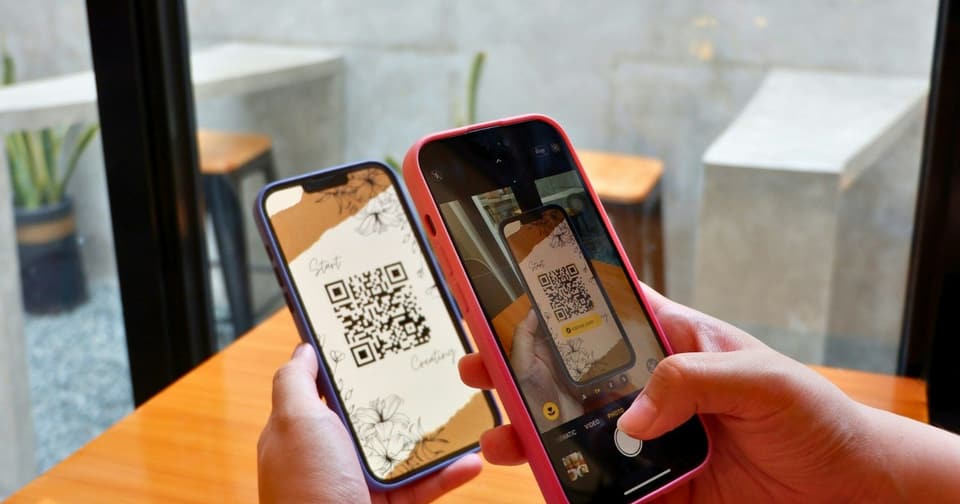 For organizersHow QR Code Event Tickets Work: Creation, Scanning and Check-InHow QR code event tickets are issued and scanned, what each result at the gate means, how repeat scans show up, and how to prepare your check-in team.5 Nov 2026 · 8 min read


